
What Is a Finishing Spice? And Why Heat Should Be Enjoyed
A finishing spice isn’t something you cook into food — it’s what you add at the very end to wake everything up. It’s the final move. The difference between good and unforgettable.
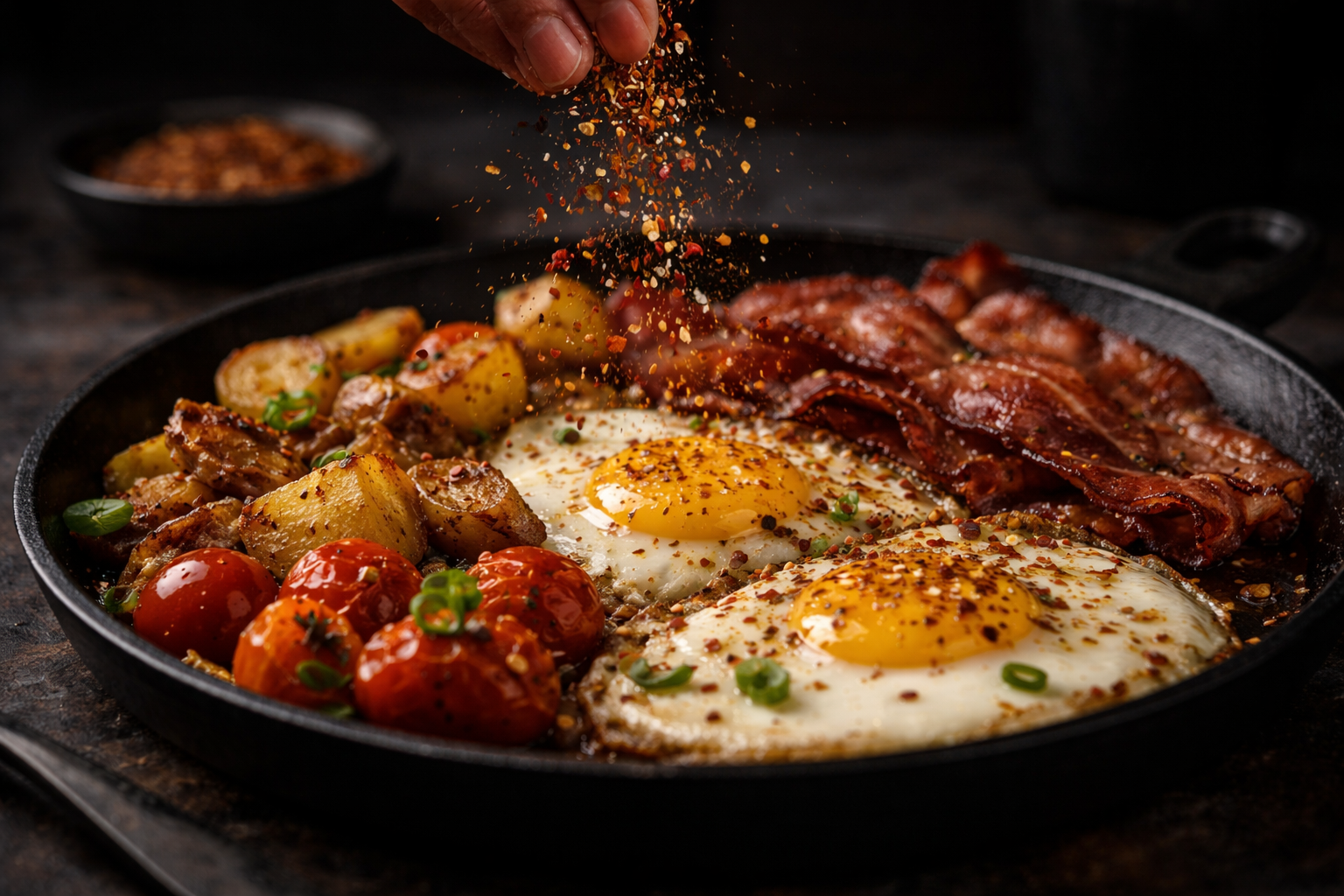
Look at a simple breakfast: fried eggs, crisp bacon, roasted potatoes. Solid. Now hit it with a bold finishing blend — something layered with heat, texture, and depth. Suddenly the yolk pops harder. The salt sharpens. The fat balances. The whole plate comes alive.
That’s the role of a finishing spice. Not to overpower. Not to punish. To elevate.
At Pantry Punk, we build our blends flavor-first, heat second — designed to sit on top of food, not disappear into it. Because the last touch should be intentional.
What Is a Finishing Spice?
A finishing spice isn’t something you cook into a dish.
It’s something you add at the end — after the steak rests, after the eggs hit the plate, after the pasta is tossed.
It’s the final adjustment.
The last 5%.
The moment where flavor locks in.
Cooking builds a foundation.
Finishing defines character.
Why Finishing Changes the Experience
When spices are cooked for long periods, their sharpness softens. Aromatics fade. Heat rounds out.
A finishing spice keeps its structure.
Because it’s added at the end, you taste:
Bright aromatics
Clean heat
Texture
Full flavor clarity
It doesn’t blur into the background.
It finishes the thought.
Heat should be enjoyed
It All Begins Here
There’s a strange culture around spice.
It’s either treated like a dare
or diluted into something forgettable.
We don’t subscribe to either.
Heat isn’t punishment.
It isn’t a gimmick.
And it isn’t supposed to dominate the plate.
Heat should be layered.
Inviting.
Intentional.
It should enhance flavor — not hide it.
That’s where most traditional “super spicy” blends miss the mark. They chase intensity first and flavor second.
We build in the opposite direction.
Flavor first. Heat in support.
Always.
One Blend - Three Intentional Levels
It All Begins Here
Pantry Punk is built on a single-flavor architecture.
The recipe doesn’t change.
The balance doesn’t change.
Only the heat level adjusts — so you can choose your experience.
Opening Act
A mild, confident introduction.
For the slightly adventurous — or anyone who wants warmth without overwhelm.
Second Wind
A deeper expansion.
For those ready to lean in and let heat carry more presence while staying balanced.
Final Hour
Full expression.
Designed for those already comfortable with heat and ready to let it fully bloom — without sacrificing flavor.
None of them overpower.
None of them compete with your food.
They elevate.
What Makes Pantry Punk Different
It All Begins Here
Most high-heat blends are built around a single goal: intensity.
That often means:
One-dimensional burn
Excess salt
Heat that flattens everything else
We refuse that approach.
Our blends are designed to:
Preserve ingredient integrity
Enhance savory depth
Deliver structured, clean heat
Support the dish — not replace it
If your steak tastes like “spice” instead of steak, something went wrong.
Finishing should sharpen flavor, not erase it.
How to Use a Finishing Spice
Use it at the end.
Sprinkle lightly over:
Rested steak
Fried eggs
Buttered pasta
Roasted vegetables
Avocado toast
Popcorn
Even cocktails
Start light. Adjust intentionally.
You’re not dumping seasoning.
You’re finishing.
The Philosophy
Cooking builds flavor.
Finishing expresses it.
Heat isn’t something to survive.
It’s something to enjoy.
And when it’s built on flavor first, you can feel the difference immediately.
Ready to Finish Strong?
Explore Opening Act, Second Wind, or Final Hour — and choose your heat level without sacrificing flavor.